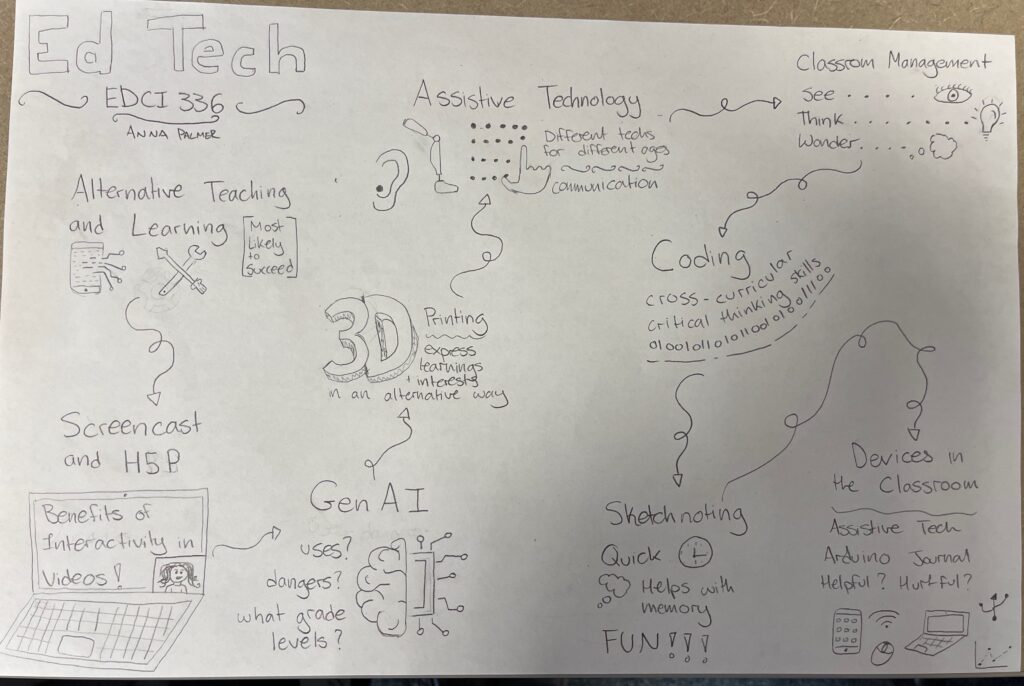
Here is my final sketchnote reflection! I really enjoyed making this; it is not a style of reflection that I am used to, so I found it fun and interesting to think of drawings that corresponded to topics. I also had a very easy time finding things and topics that stuck out to me. The material covered in this course was extremely interesting, and I definitely believe that it will be applicable in my future teaching career!
In what ways can assistive technology be used to create a more inclusive learning environment for students with diverse needs? This is the question we explore throughout our Educational Technology Presentation, linked below.
It has been a while since I have updated my free inquiry blog! That is not to say that I haven’t been practising, however. I believe my piece is coming along nicely. I am finally playing hands together, and although it is difficult, I am proud of how far I have come.
Unfortunately, as you can clearly tell from the video, there are some problem areas. As I have mentioned in previous posts, the further into the piece it gets, naturally, the less I have practised it. This fact is made evident by the last couple minutes of the video. I thought about re-recording; however, I think that it is important to be honest with myself about my progress– this is where I am at, and that is okay. Other than those sections, I think that the piece as a whole is sounding good. The chorus is the part of the piece that I am most confident in playing, and by extension the part that sounds the best.
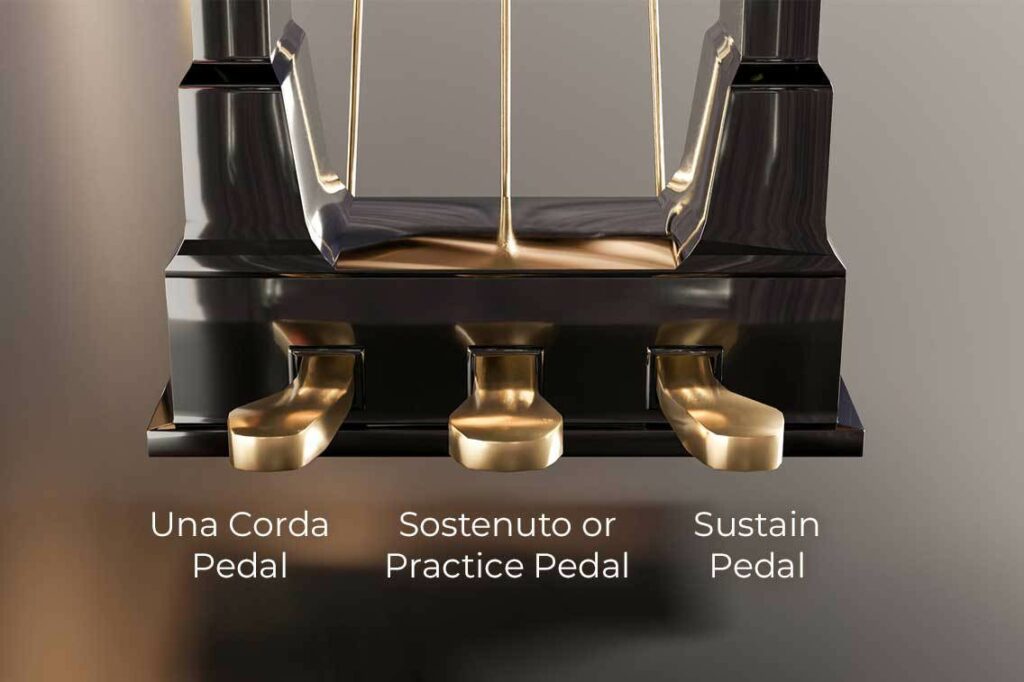
I am also working on incorporating the sustain pedal. This is a pedal that allows the notes you have played to last longer and continue sounding even once you have let go of the keys. It also creates a nice blending sound; however, as evidenced in my video, a little goes a long way. Holding the sustain pedal for too long can cause a muddled sound that is confusing and displeasing to the ear. Using it sparingly can create a fluid and beautiful melody, which is my ultimate goal.
Image Credits: Piano Forte Music School
I can’t believe my free inquiry is almost over! Looking back at old videos it is amazing how big of a difference there is! It is clearly not perfect; however, it gets better and better each time I play. I cannot wait to see what my final submission will sound like!
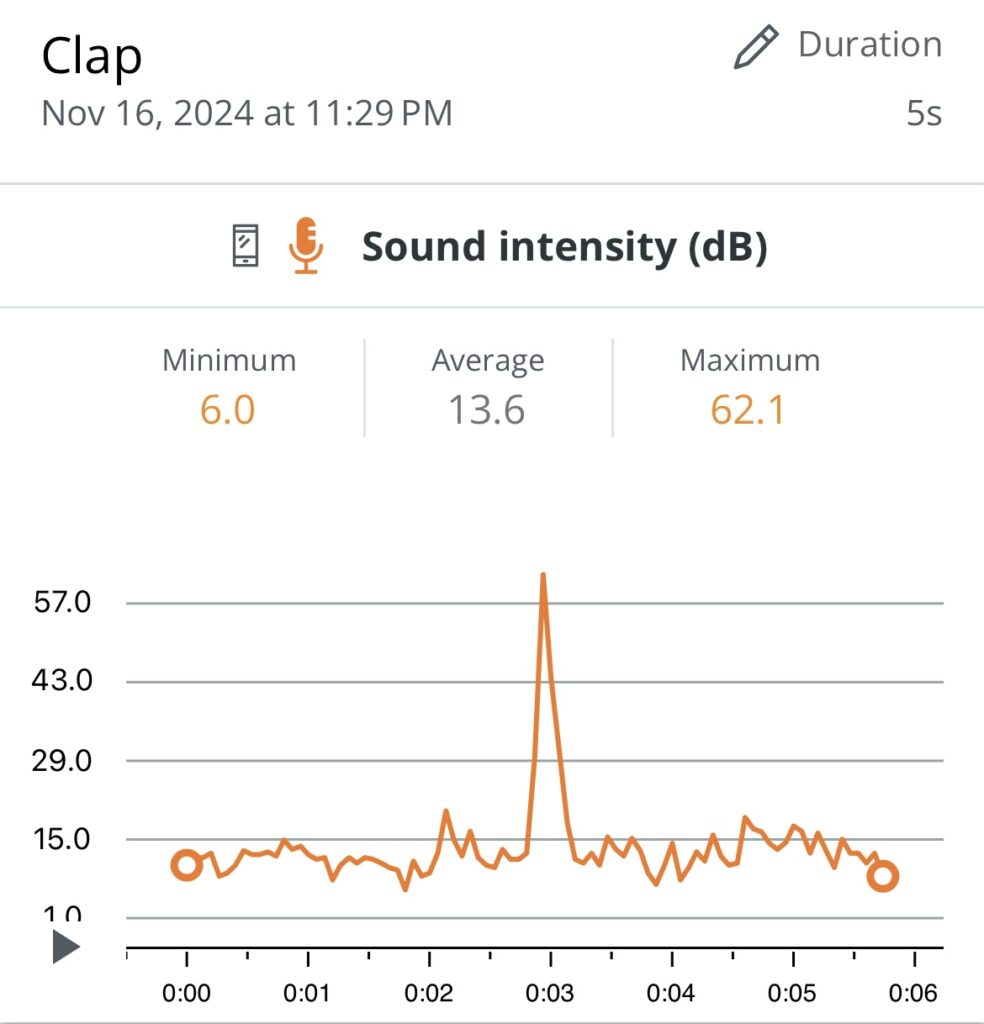
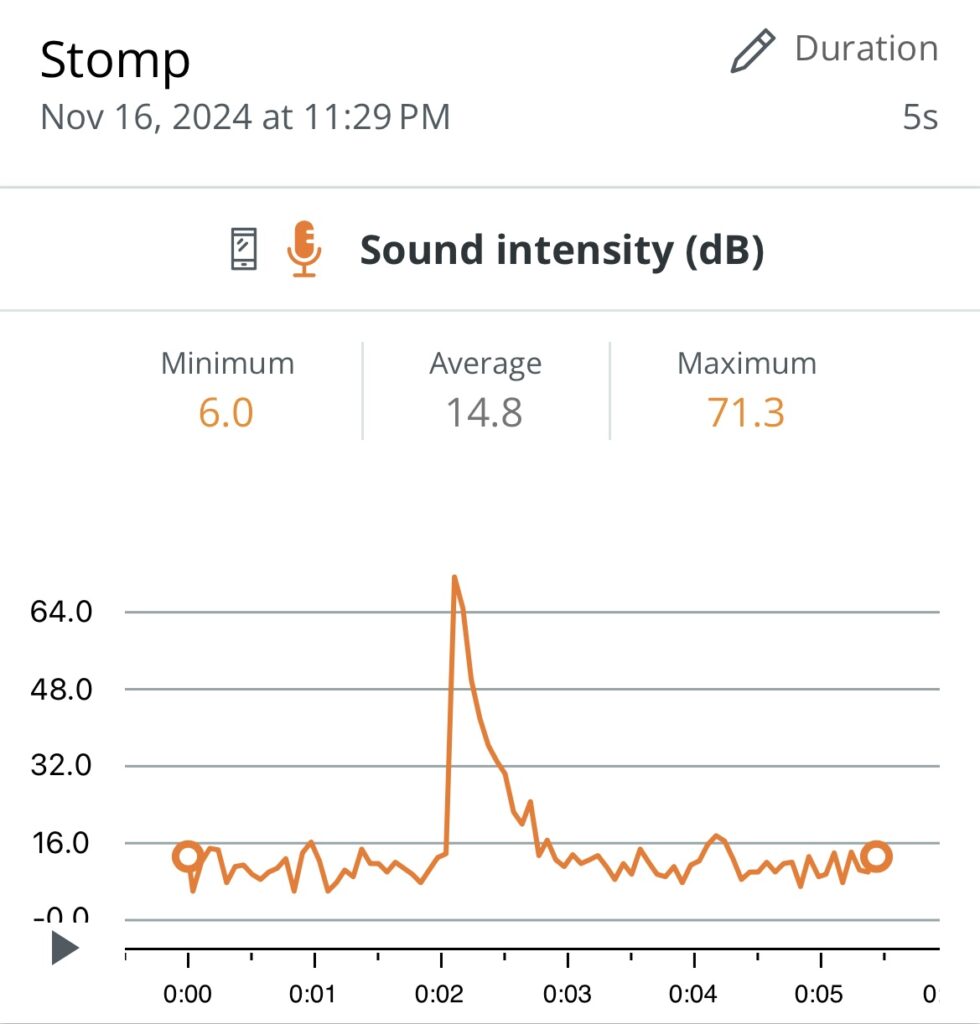
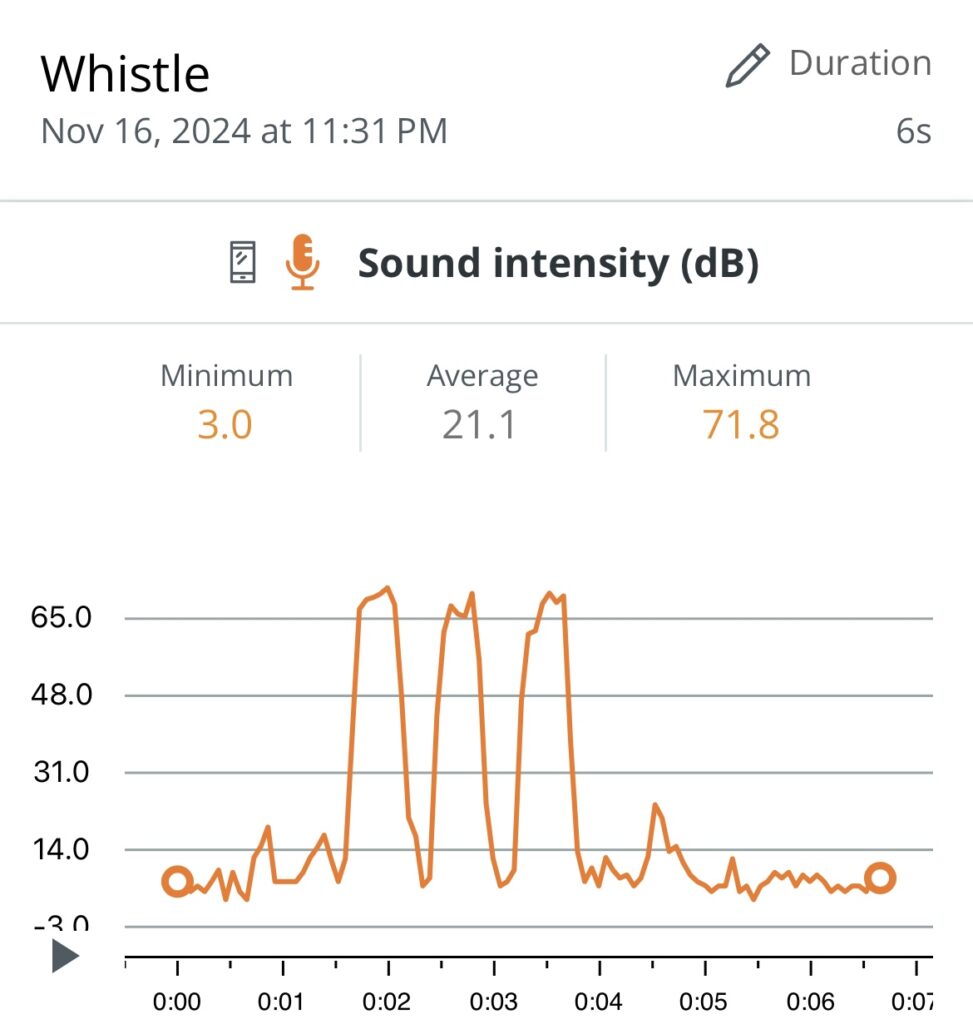
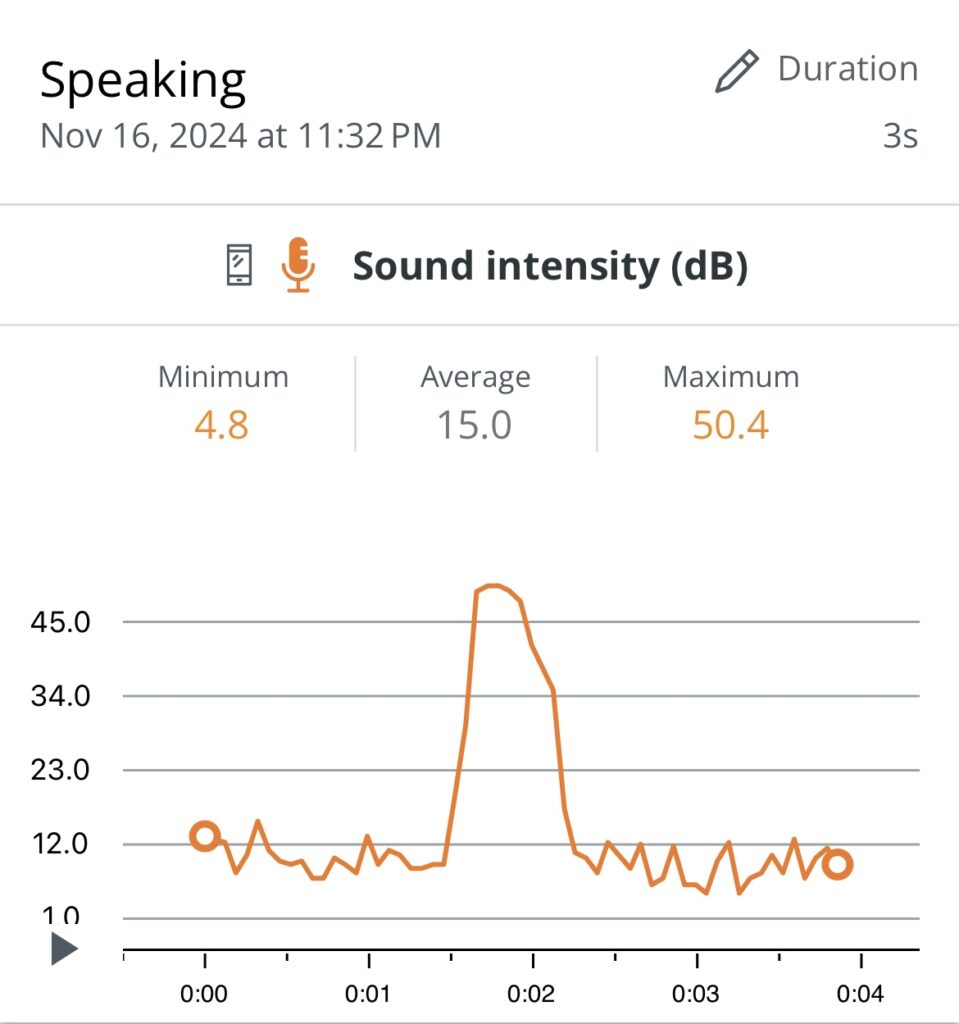
This week, I got the opportunity to explore Arduino Science Journal. This is a super cool app that allows students to perform experiments from wherever they are, whenever they want! It also allows students to record any data they find, as well as provides many different useable sensors such as a barometer, a compass, a magnetometer, and more. For my experiment, I used the sensor that measures sound intensity, and I performed actions such as clapping, stomping, whistling and speaking, and recorded the difference in decibels.
As you can see, the actions that created the highest sound intensity were whistling and stomping. I believe that this is because these actions were performed closer to the microphone than clapping was. When I stomped my foot, it was right next to the phone’s speaker. When I whistled, I held the speaker close to my mouth. When I clapped, however, the phone was on the floor and I clapped above it. In order to perform this experiment with less variables, next time, I would place my phone on a table instead of the floor, and not hold it for some actions and not others.
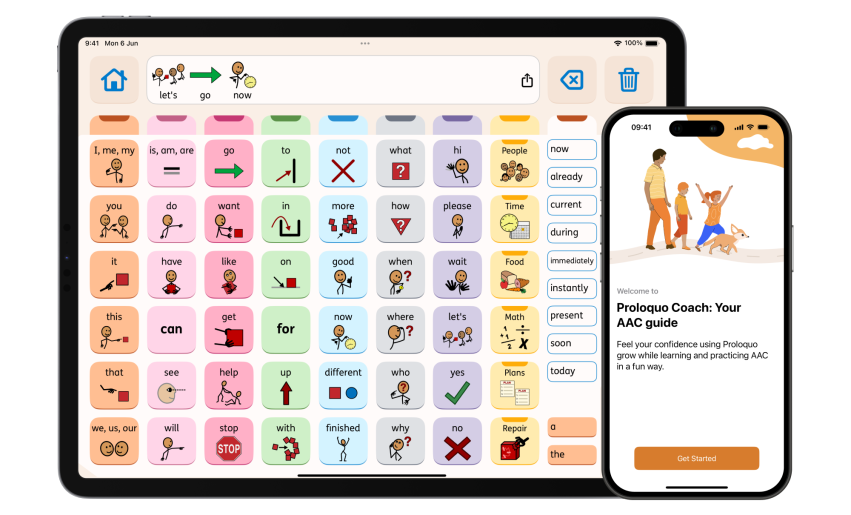
Technology in the classroom is a widely debated and nuanced topic. Aside from purely academic uses, tablets can be a great tool for students with learning difficulties. One such resource is Proloquo. This is an app that is essentially a touch board of different words, phrases, feelings, actions, and more, that, when pressed, say the word aloud through the speaker. This is a great way for students with speech difficulties to communicate.
One risk with this technology is that it could create a reliance. Students become accustomed to using the app, and may be reluctant to try speaking without it, even if they are ready and able. I do, however, believe that the benefits outweigh the risks. Students will grow out of that reluctance; what is important is developing their self-confidence and independence, something that this app does well.
The “See, Think, Wonder” exercise is a very interesting and effective inquiry tool. My Link2Practice classroom teacher (French kindergarten) uses a similar technique, primarily for science and math. For example, the last day that I was there, the teacher had a photo like the one below on the projector.
Image Credits: Kumar Madhukar
They have done exercises like this before, so they knew what to do. The teacher would start by asking for “I see” (je vois) statements, then move into “I think” (je pense) statements, and finally, “I wonder” (je me demande) statements. Some student examples were “I see a flower,” “I think it’s night,” “I wonder who put the candles there,” etc. There are no boundaries on the questions they can ask or the observations they can make, so long as they are relevant to the photo During activities like this, the students are clearly engaged, and are usually extremely excited for their teacher to call on them so that they may express their thinking.
For the math component, they had to pick one object, count how many there were in the photo, and write and draw it in their notebook. For example, if they chose the candles, they would count one, two, three candles, and draw them with the numbers written alongside. They were also expected to write any sounds that they heard in the word “candle” (chandelle).
This activity is effective in developing observational and critical thinking skills, as well as providing students the opportunity to express their thoughts and questions in a safe and encouraging environment. Every statement is treated equal, with no diminishing of ideas.
The worksheet that Rebecca uses would be an interesting modification. I am not sure that the students in my class would be able to differentiate between the different sections on their own; I think that it would be more of an effective tool to use as a whole class.